Economic Watch: German firms pivot to China amid rising global uncertainties
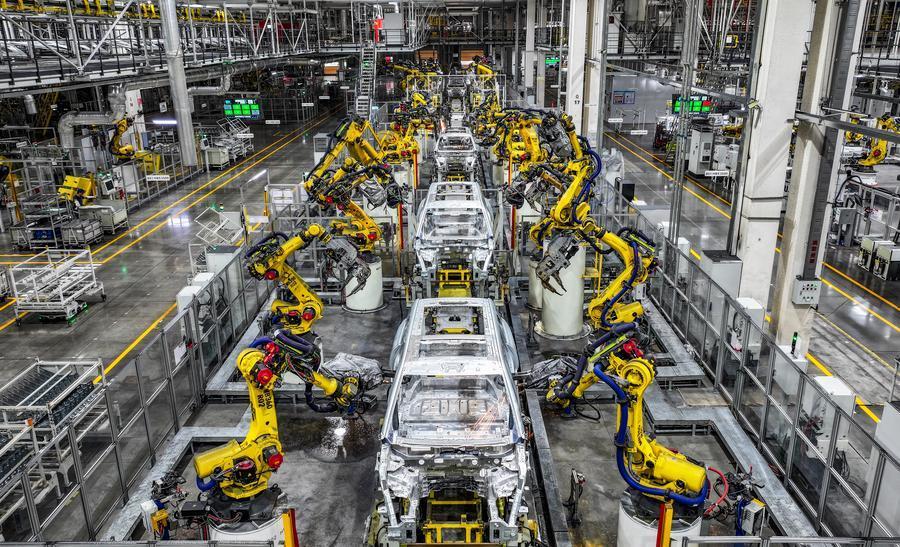
A drone photo shows a view of Qingdao Port in Qingdao,元宝山新闻网招聘护士 east China's Shandong Province, Oct. 29, 2025. (Xinhua/Li Ziheng) China's appeal to German companies continues to strengthen. Data from the German Economic Institute show that new German direct investment in China amounted to around 7 billion euros in 2025, well above the roughly 4.5 billion euros a year earlier. BERLIN, Feb. 7 (Xinhua) -- Amid mounting global uncertainty in 2025, German firms scaled back investments in the United States and pivoted to China, citing greater policy predictability and growth potential. According to the German Economic Institute, German direct investment in the United States fell by around 45 percent year-on-year between February and November 2025, compared with an over 50 percent hike in investment in China. The change is evident not only in the data but also in corporate sentiment. In recent interviews conducted in Berlin, Munich and other business centers, German executives described the U.S. market in more cautious terms. "Uncertainty" has become a dominant theme, as companies struggle to assess the medium-term policy outlook. Heightened uncertainty has a direct dampening effect on investment and trade, said Samina Sultan, an economist at the institute, noting that the current U.S. economic policy is weakening business confidence and weighing on transatlantic economic ties, gradually eroding the country's appeal as a destination for long-term investment. The financial consequences are already becoming clear. Speaking at the World Economic Forum in Davos in 2026, Volkswagen Group Chairman Oliver Blume said tariff-related costs had reduced the group's profits by about 2.1 billion euros (2.48 billion U.S. dollars) in the first three quarters of 2025. Without a meaningful reduction in U.S. tariffs, further investment would be difficult to sustain, and plans for a new Audi plant could be delayed, said Blume. "Companies fear policy volatility more than anything else," said Hermann Simon, a renowned German economist widely regarded as the father of the "Hidden Champions" theory. Frequent shifts in tariff policy, he said, make it difficult for markets to form stable expectations, undermining confidence in long-term investment. A drone photo shows the automated production at the Seres Super Factory in Liangjiang New Area, southwest China's Chongqing, Sept. 19, 2025. (Xinhua/Wang Quanchao) As a result, many firms are prioritizing risk containment over expansion, adopting more defensive strategies focused on consolidation rather than growth, he added. At the same time, China's appeal to German companies continues to strengthen. Data from the German Economic Institute show that new German direct investment in China amounted to around 7 billion euros (8.26 billion dollars) in 2025, well above the roughly 4.5 billion euros (5.3 billion dollars) a year earlier. Juergen Matthes, an expert at the institute, noted that German companies are not only expanding their presence in China but also accelerating the pace of investment. Michael Schumann, chairman of the Board of the German Federal Association for Economic Development and Foreign Trade, attributed the trend to China's comprehensive industrial ecosystem and stable policy environment, which allows companies to plan further ahead and operate with greater certainty. Longer-term data support this view. Citing figures from the Deutsche Bundesbank, the institute said that between 2010 and 2024, Germany's annual new direct investment in China averaged around 6 billion euros (7.08 billion dollars), with a significant share coming from the reinvestment of profits generated locally. More importantly, German companies are moving beyond initial market entry toward deeper integration in China, increasingly localizing key operations such as procurement and research and development. Launched last November, Volkswagen's full-process research and development and testing center in Hefei, Anhui Province, illustrates this shift. The facility enables complete vehicle platform development outside Germany, from concept to market launch, cutting development cycles by about 30 percent and allowing the company to respond more quickly to market demand. In its 2025/2026 business confidence survey, the German Chamber of Commerce in China (AHK China) said that 93 percent of respondents intend to remain engaged in the Chinese market, reflecting greater optimism than a year ago. About 65 percent said they are confident about China's economic development over the next five years. Research and development has emerged as a new focus of German investment over the past two years, said Maximilian Butek, executive director and board member of the German Chamber of Commerce in China for East China. The strategy, he said, reflects not only cost considerations but also early positioning for future competition.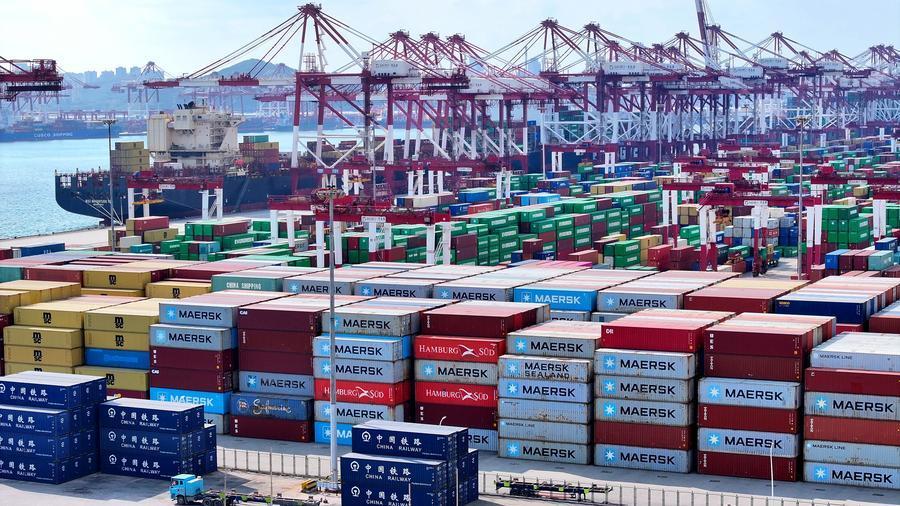
- 最近发表
- 随机阅读
-
- 国乒4人晋级四强!亚洲杯今日收官,赛程来了→
- 前10月造船完工量同比增长12%
- 陈楚生2026「荒芜之境」上海站圆满落幕 全域升级铸就视听新标杆
- 国家数据局发布平台企业典型投资案例
- 至少14人被拍到!这场温暖“接力”,感动众多网友
- 2026巴基斯坦文化周在成都开幕
- 商务部将28家美国实体列入出口管制管控名单
- 中国客车在世界客车博览会受关注
- 视频丨共同分享荣耀时刻 军地联合送喜报
- 暌违三年,热爱回归!|2026余景天「Echo Pulse 脉浪回响」巡回演唱会首站上海站正式官宣!
- 《丹霞山》:丹山碧水映岭南,亿年奇境看丹霞
- 中国客车在世界客车博览会受关注
- 视频丨中国“捕风”实力有多强?记者带你去海面上看看
- 汪毅:捐献生命“火种” 点亮希望之光
- 郎朗乐境音乐会定档7月5日深圳:以破界之姿,开启全维感官盛宴
- 宁泽涛为什么被踢出游泳队 宁泽涛在游泳的表现以及现状
- 新闻调查丨从赛场到雪场 揭秘张家口冬奥遗产的“可持续密码”
- 2024年四季度我国新房销售扭转下滑态势
- 我国新能源营运汽车达164万辆
- 安徽“强链补链”计划助推制造业集群发展
- 搜索
-
- 友情链接
-
- 寿光篆刻新闻网招聘公示
- 资兴宜章新闻网首页招聘
- 青岛沙子口新闻网
- 青少年新闻网站官网
- 百色新闻网苹果
- 安乡县官网新闻网站
- 宁海翠冠梨新闻网
- 铜川方口新闻网首页网址
- 康定地热新闻网首页最新
- 陕西新闻网融媒体中心
- 甘肃高速新闻网官网首页
- 吴忠市委新闻网官网
- 台州东方新闻网招聘网
- 最好的时政新闻网
- 株洲新闻网天虹
- 企业环保日新闻网
- 单县包河新闻网官网
- 临沭消防新闻网官网查询
- 宜兴紫砂大师新闻网官网
- 石门猎豹新闻网首页官网
- 湖南新闻网张翀
- 赤峰新闻网实验高考
- 澎湃新闻网筷子杀人
- 遵义麻江新闻网首页官网
- 涵江石狮新闻网首页新闻
- 下载深圳福田新闻网官网
- 温州新闻网头条直播
- 兰州新闻网发稿流程
- 遂宁新闻网官网首页网站
- 大邑残联新闻网官网首页